
Turn The Page…

This week’s writing prompt provided by Stories From The Jukebox (link below).
Submissions this week are inspired by the song Turn The Page, written by Bob Segar.
My effort is a short story. Due to being British and therefore knowing very little about Baseball, I obviously based mine on this very American sport 😳. Apologies to any aficionados for any inaccuracies you spot.
Note: Although this is based on real events and the people who lived through them, it is a work of fiction. Some things are imagined, others might not be true.
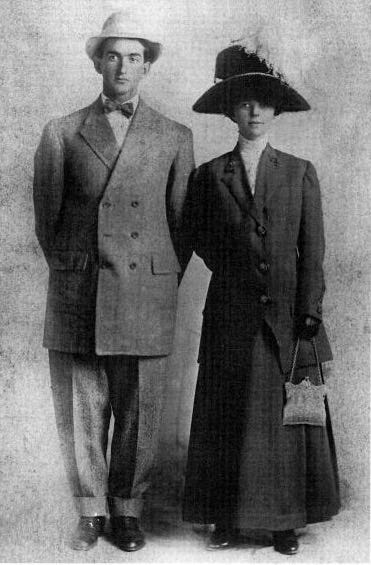
My wife, Kate, keeps newspaper cuttings and faded black-and-white photographs in a box stored away in an old bedside cabinet.
Mementos of way back then.
I never did learn to read and write, but I know they capture the good days, the better times.
In truth, I didn’t need these things to remind me. Even now, more than three decades later, all I need to do is close my eyes and I’m right there again.
Although I didn’t play, I was an excited spectator at Game One of the 1918 World Series. I’d managed to get time away from a wartime job at a shipyard to watch my teammates attempt to defend the title I’d helped them win a year earlier.
Game One was played at Comiskey Park in Chicago, Illinois.
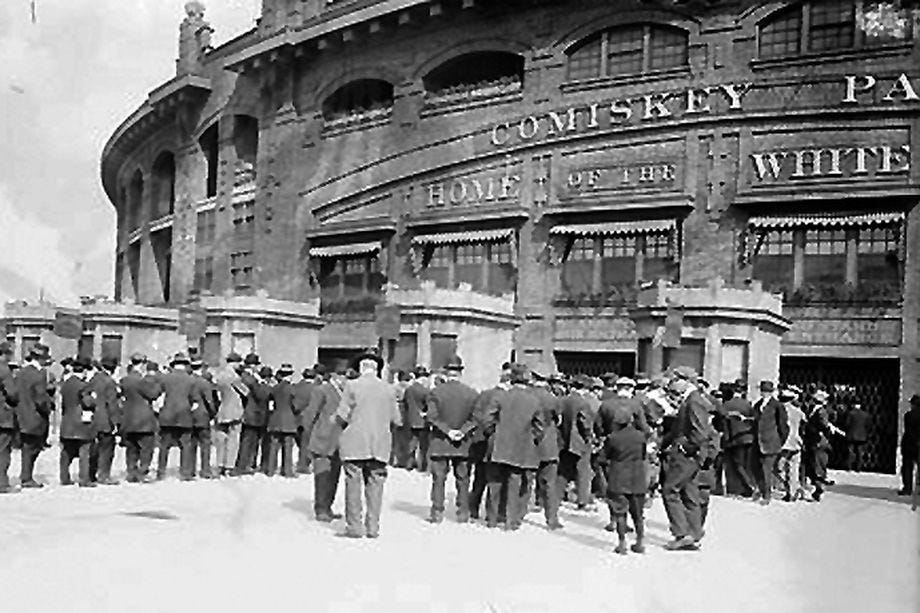
We lost by 1-0 with Stuffy McInnes knocking in the game’s only run. My old friend, Babe Ruth, pitched the shutout before 19,274 fans.
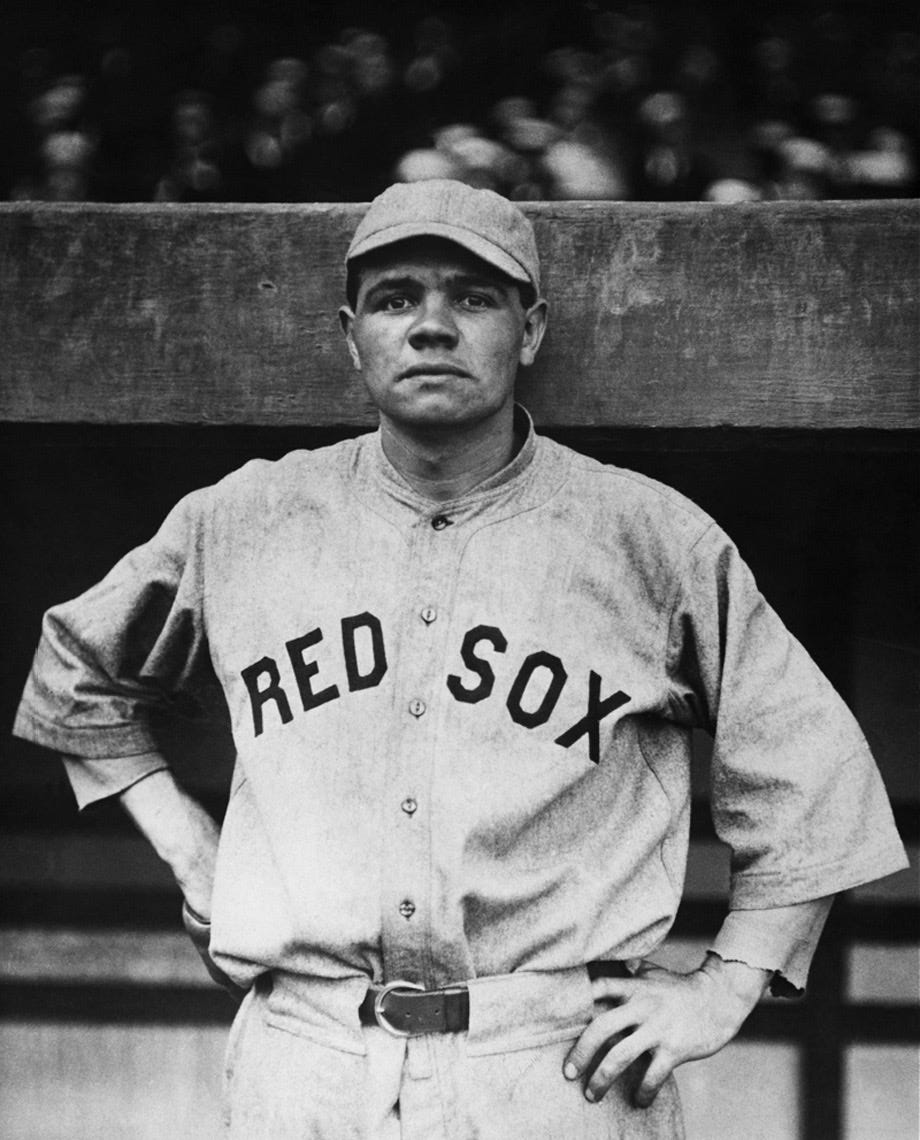
A disappointing start, but my fondest memory of that match-up was the US Navy Band playing The Star-Spangled Banner during the seventh inning stretch.
Red Sox infielder, Fred Thomas, who’d been granted furlough from the Navy to play in the World Series, turned and saluted the American flag. Other players turned to the flag with hands over their hearts and the crowd began to sing.
It would be sung at all remaining games in the series. Although it wouldn’t become the official anthem of the United States until 1931, its use at sporting events and on special occasions became more and more popular after that day in Chicago.
I was proud to be an American that day, proud to be working to support the war effort, proud to be a baseball player.
Whatever they said about me later, they can never take those feelings away.
We ended up losing the series four games to two. Disappointing, but we would have a chance to redeem ourselves twelve months later.
The 1919 World Series was between the Chicago White Sox and the Cincinnati Reds. A best-of-nine series for only the second time in the history of baseball’s season finale.
I was back on the roster and raring to go.
Whatever they say.
I can’t say for sure that some of my teammates weren’t involved in some kind of fix. As a team, we weren’t happy with how much we were getting paid, in comparison to those in Boston and New York.
In hindsight, there were some shady characters around in the days and weeks leading up to the World Series. It was only much later that I learned that one of them was Arnold Rothstein, the notorious underworld figure.
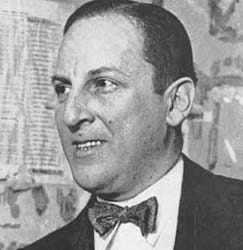
There were some uncharacteristic performances from some of my teammates, right from the first game.
Sportswriters would later say that a throw by Eddie Cicotte in the fourth inning, that prevented a double play was suspicious.
Did anyone speak to me about joining the fix?
All I’ll say is look at my record in the series.
We may have lost by five games to three, but I led all the players with a .375 average. The only home run in the whole series was hit by me, and the twelve hits I recorded across the eight games were a record at that time, and tied for a series of that length.
I played to win.
Whatever they say.
Can you imagine what it’s like to go from being considered one of the greatest hitters in baseball, to being banned for life from playing the game I lived for?
To spend the rest of my days scratching a living, using assumed names just to stay close to the feeling I only ever got from baseball.
The day a child looked at me with haunted eyes and pleaded.
“Say it ain’t so?”
Later when I was running a liquor store and I noticed Ty Cobb enter. I was as good as him, better than him maybe, but I pretended not to know him.
“Don’t you know me?” he asked.
“Sure I know you, Ty,” I replied. “But I wasn’t sure you wanted to know me. A lot of them don’t”.
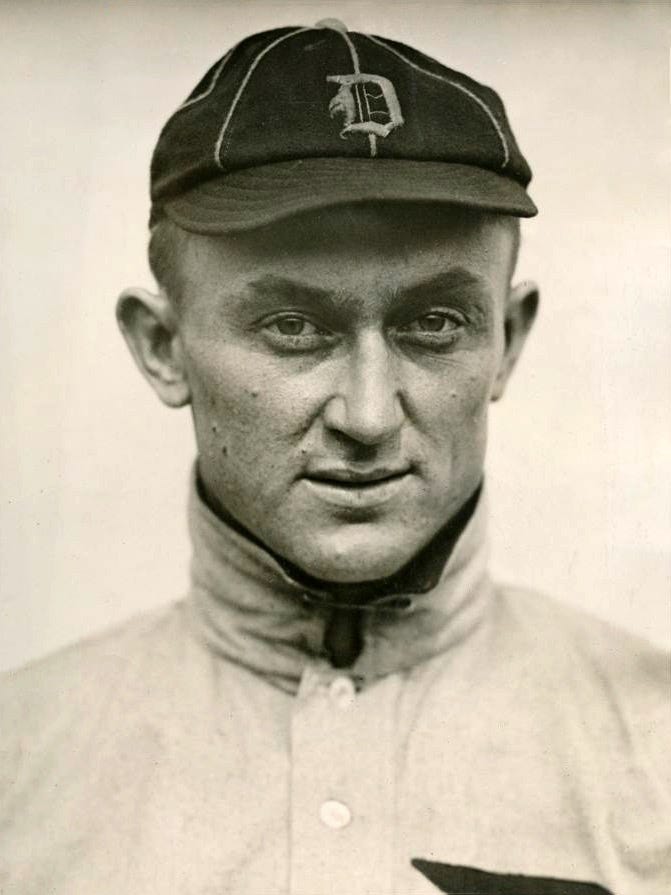
That was who I became, not who I should have been.
It’s December 5th, 1951. I am sixty-four years old. I’ve had heart trouble for a few years now.
Tonight I will suffer a heart attack that will finish me off. I will finally turn the page on this life.
It’s not the end though.
If you build it, I will come.
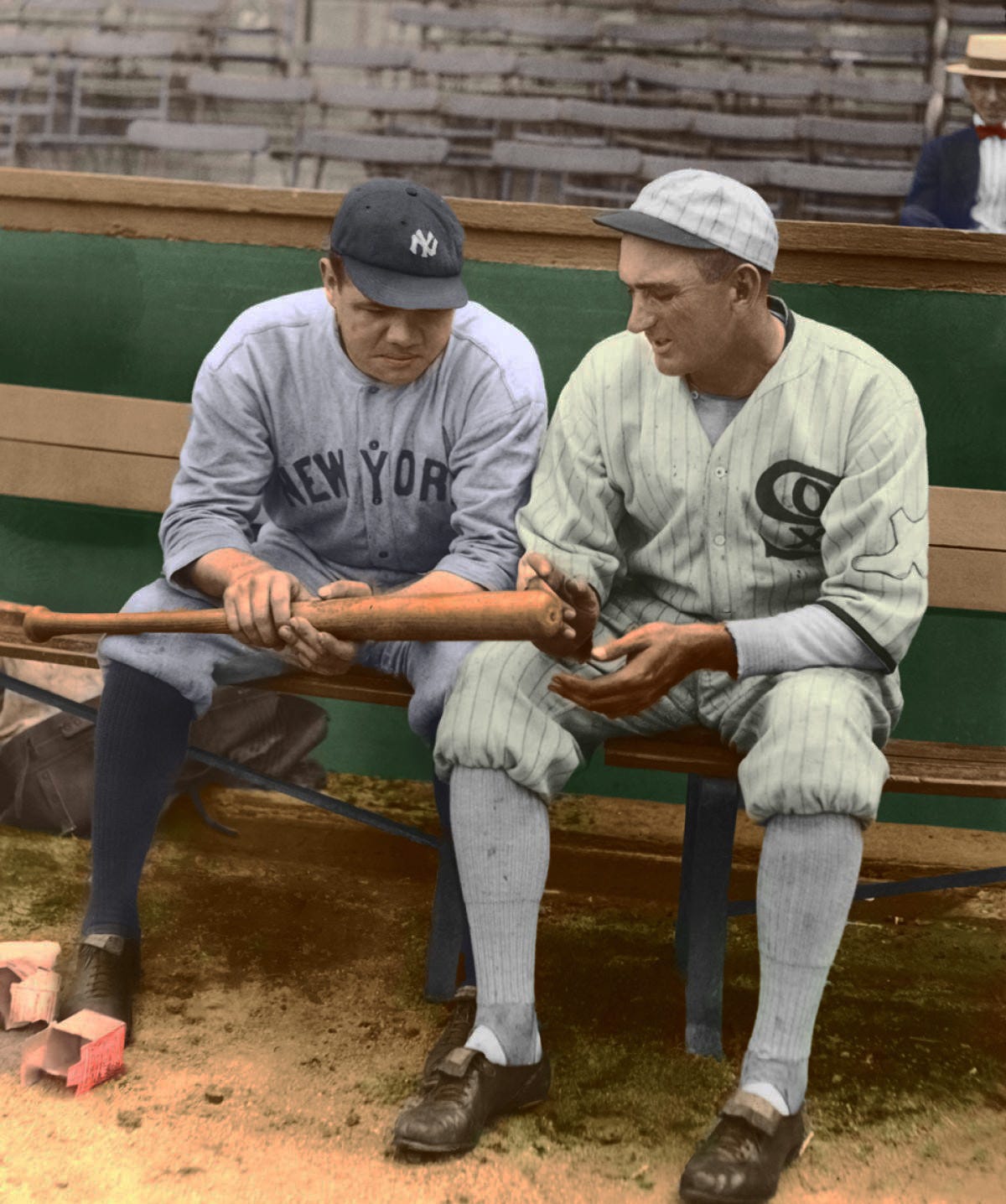
Shoeless Joe Jackson was one of the greatest baseball players of all time.
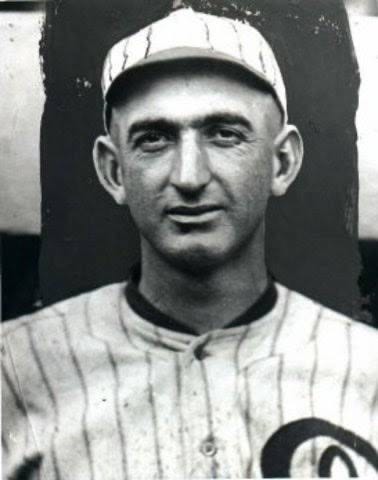
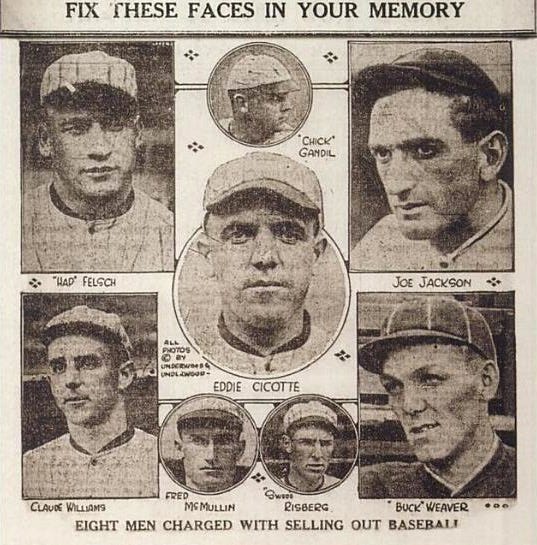
He was also one of eight members of the Chicago White Sox baseball team that were accused of colluding with underworld figures to influence the result of the 1919 World Series.
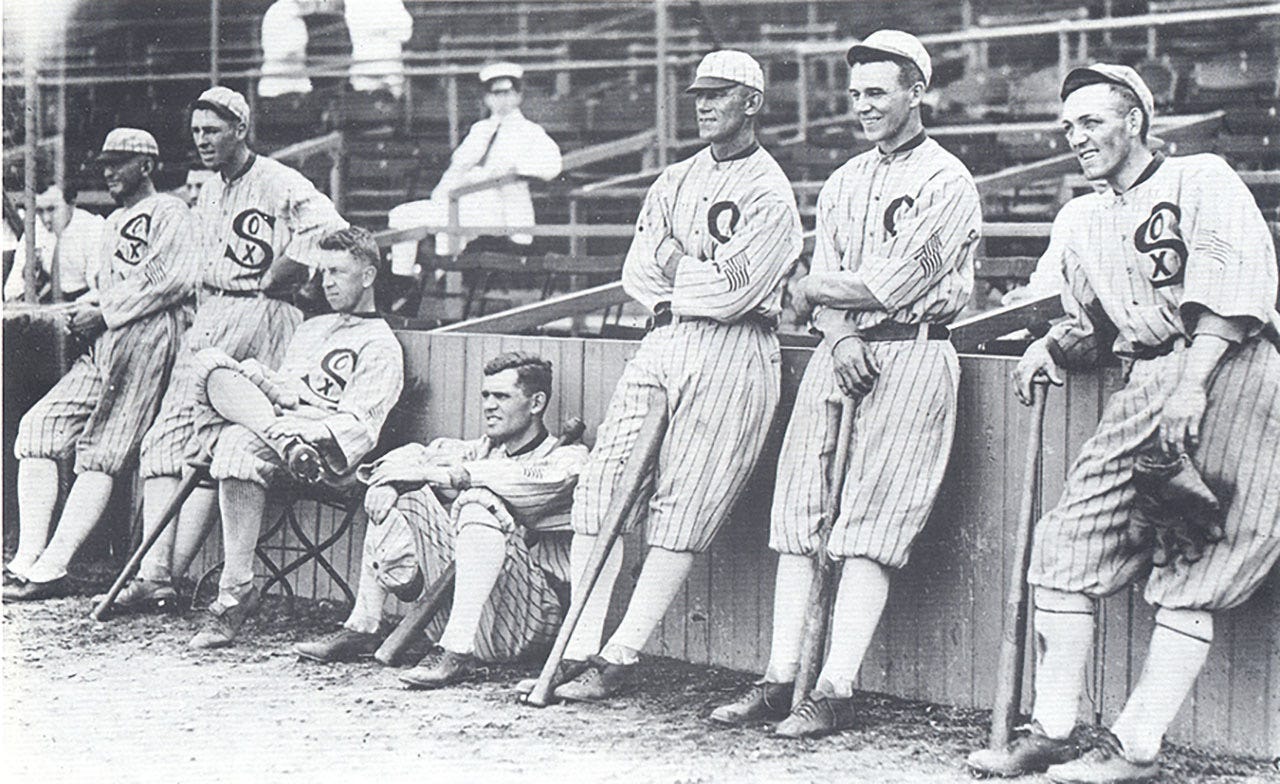
Although they were acquitted of criminal charges, they were banned for life in August 1921 for fixing the 1919 World Series or having knowledge about the fix without alerting the league. Thereby ending the Major League Baseball career of Shoeless Joe Jackson.
On May 12th, 2025, the lifetime bans were officially ended. A ruling made that their deaths meant they no longer represented a threat to the game of baseball.
Shoeless Joe Jackson is now eligible to be entered into the Baseball Hall of Fame. Something that could happen as early as 2027.
Another page might be about to be turned on one of sports’ most infamous scandals.
Thanks for reading.
I hope you enjoyed reading this one as much as I enjoyed researching and writing it. This is really all I want to do now.
Please subscribe/upgrade or make a one off donation so I can do just that. I don’t have the words to say how much I’d appreciate it ❤️.
This pulled me in — the way you fold a single life into the ache and glory of a whole sport.
Those old stadiums feel like holy places when you travel — Comiskey, Fenway, a cornfield in Iowa — where the ghosts of choices and glory still ping off the stands. Standing there, you get how myth and mess sit side by side: the roar, the scandal, the kid shouting “Say it ain’t so” and the truth that sometimes it really is so.
What you captured is why we travel the way we do — not just for pretty views, but to stand in other people’s history and feel its weight. Redemption and revision happen slowly - museums reopen, bans are reconsidered, stories get new light - and being there makes those shifts feel real.
Next time I’m near an old ballpark I’ll go sit in the cheap seats and listen for the part of the story nobody wants to forget. History’s messy - and the travel that traces it makes us humbler and wiser.
I loved this trip into history! Thank you Phillip